What Is Virtual Reality? How It Works and What It Actually Feels Like
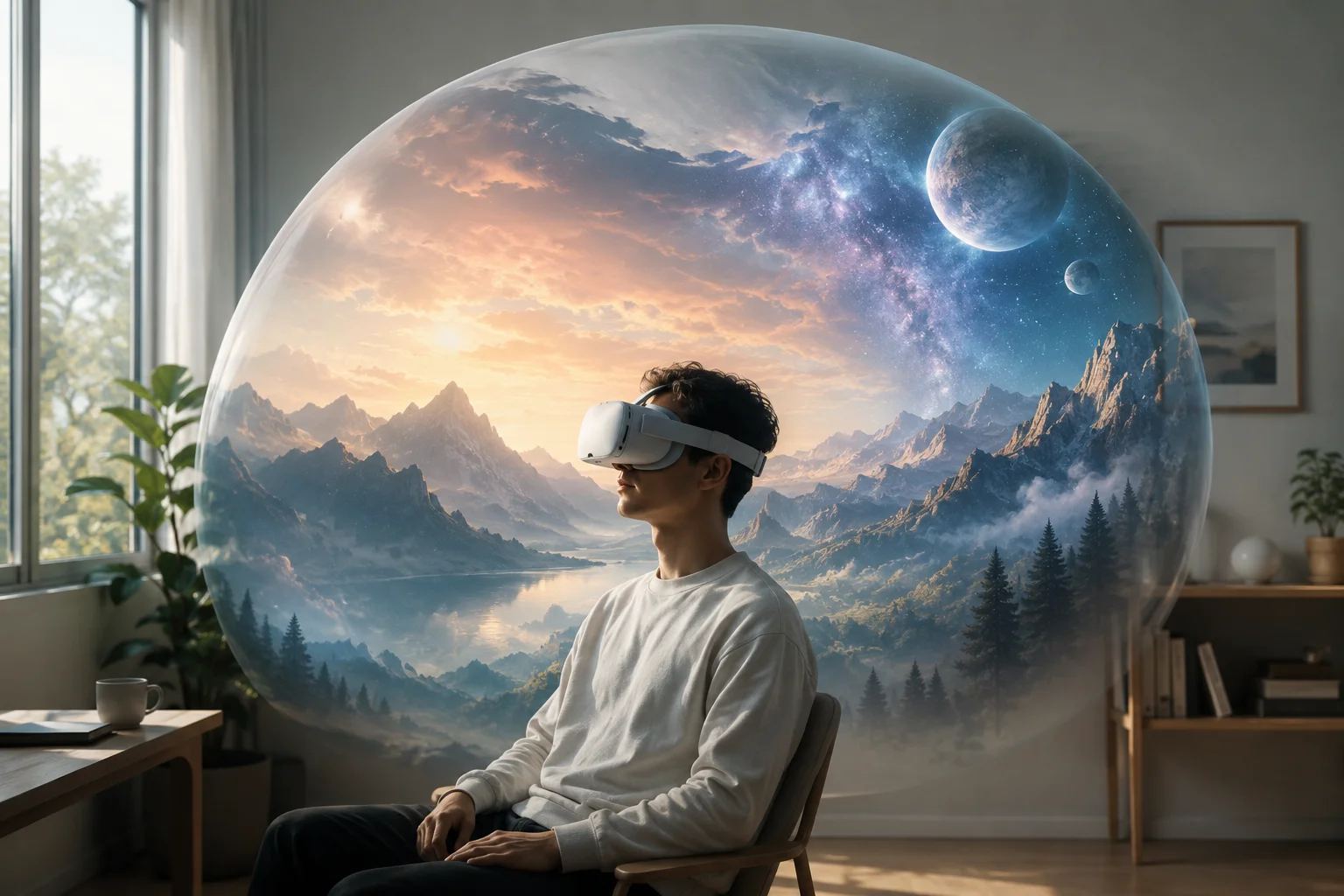
Virtual reality is two small screens strapped to your face, one per eye, wired to sensors that redraw the picture every time you move your head. That is the entire invention. The games, the workouts, the cinema screen the size of a building — all of it is built on top of that one idea.
What sells the illusion is timing, not resolution. Each eye gets a slightly offset image, which is where the sense of depth comes from, but the part that convinces you is the tracking. Cameras on the outside of the headset work out where your head is in the room and redraw everything 90 to 120 times per second. Lean in and the world stays put. Turn around and something is behind you. Your inner ear reports a movement, your eyes confirm it, and the argument your brain usually has with a screen never starts. Researchers call the result presence. You will notice it as the moment you duck. When the timing slips — a struggling PC, a weak wireless link, a sloppily built game — the disagreement comes back, and that is where nausea comes from.
The first thirty seconds are almost always underwhelming. You look at the floor, then at your hands, and think: fine, it's a screen. The moment tends to arrive a minute later, when something has height. You will know perfectly well that you are standing on a rug in your living room, and your knees will lock anyway. That gap between what you know and what your body does is the whole product. The rest of a first session is less cinematic: the headset warms up against your face, your arms get tired faster than you expect, you look ridiculous, and twenty minutes is plenty. Nobody's first hour is comfortable.
Games are still why most headsets get bought, and the good ones justify the purchase on their own — Beat Saber, Batman: Arkham Shadow, Walkabout Mini Golf, and, if you have a gaming PC, Half-Life: Alyx. Fitness is the sleeper category: FitXR runs coached classes, and titles like Thrill of the Fight and Gorilla Tag will soak a shirt without ever announcing themselves as exercise. Bigscreen puts a film on a screen no apartment could physically hold, which is the closest VR gets to an easy sell. Virtual monitors through Immersed or Virtual Desktop genuinely help if you work off a laptop in a small space, with the honest caveat that typing while wearing a headset is worse than typing without one.
The most established non-gaming use is medical, and it is not marketing. RelieVRx has FDA authorization as a prescription device for chronic lower back pain, with its own billing code and a rollout across US veterans' hospitals. Exposure therapy for phobias — heights, flying, public speaking — has roughly thirty years of studies behind it, because a headset lets a patient take off in a plane six times in one session. Surgical training and stroke rehabilitation run on the same logic.
Getting in costs less than people assume. A Quest 3S is US$349 for the 128GB model and needs no PC and no phone: the computer is inside the headset. The Quest 3 is US$599 with sharper lenses and more storage, and if you already own a PS5, the PSVR2 sits around US$399. Everything went up in April 2026 when the memory chip shortage hit hardware pricing across the board, so treat list prices as a floor rather than a ceiling once shipping and import taxes are added. You also need roughly two by two metres of clear floor and decent Wi-Fi. That is it.
Now the part most explainers skip. VR is not the metaverse: Meta moved Horizon Worlds to phones during 2026 and stopped developing the VR version, and what people actually do in headsets is play, sweat, and watch things. You do not "enter the internet" — you open apps, the way you would on a console. It does not replace your computer, and anyone claiming they work eight-hour days in a headset is describing an ambition, not a habit. And the twenty-dollar plastic frame that holds your phone is not virtual reality: it has no tracking, so the image cannot respond to your head, which is the one thing that makes VR work at all. If you want the full map of the acronyms, we have it in VR, AR, MR and XR explained.
What VR is, in 2026, is a mature and slightly unfashionable gadget that does a small number of things better than anything else on earth. If any of them appeal to you, the Quest 3S is the honest entry point — and if you are still unsure which headset fits how you would actually use it, the quiz sorts that out in two minutes.
Answer 7 quick questions and find the headset that fits you in 60 seconds.
Take the VR Finder quiz →Prices and specifications are subject to change. See our Privacy Policy.